
It’s time for another ASCF investor’s update, covering all the key market trends from the past month, including the latest RBA moves, property market trends, inflation analysis, and more.

You can catch up with past investor’s updates on the ASCF Blog. If you would like to receive these updates monthly via email, sign up to receive an Investor Pack here, or click here to invest now.
Trading Update
Following the RBA’s decision to increase the official cash rate by 0.25 percentage points to 4.60% at their September meeting, attention now turns to the Board’s penultimate meeting of the year on November 3rd.
Inflation & RBA Prospects
The RBA’s unanimous decision to increase rates to 4.60% at their September meeting marks the highest official cash rate in Australia since 2011. In their statement, the Board cited “the conflict in the Middle East,” “global energy prices,” “AI-related demands,” and “pressure on domestic capacity” as factors that contributed to this decision. They also emphasised that “inflation is still too high” and acknowledged the possibility of “increasing the cash rate target further if needed.”
After the Board released this decision, August’s inflation data showed the CPI rose to 4% in the 12 months to August 2026, up from 3.5% in the 12 months to July 2026. Trimmed mean inflation remained at 3.6% in the 12 months to August 2026. In seasonally adjusted terms, this represented a 0.7% MoM increase to the CPI and a 0.2% MoM increase to the trimmed mean.
In response, the Big Four banks are split in their November forecasts. Westpac expects another “25bp increase in November, provided there is no sudden resolution of the Middle East conflict beforehand, or some other event that significantly lowers the outlook for energy-related costs.”
ANZ sees things similarly, stating, “we continue to expect the RBA to hike the cash rate by 25bp at its November meeting.” ANZ’s data also shows that consumer confidence remained depressed following this latest rate increase, sitting at 67.7pts for the week ending October 18th.
On the other hand, NAB are predicting the RBA will hold at 4.6% in November, noting, “for now, we continue to forecast the RBA on hold with the risk that further tightening may be required.”
CommBank also believe the RBA will hold in November, but acknowledges the potential for further increases. They add, “With unemployment rising, this should allow the RBA to stay on hold in November and reassess in December. However, the November meeting is ‘live’ and structural forces have materially increased the risk that several more interest rate hikes will be needed over the next 6-12 months.”
Property Market Overview
In the job market, the unemployment rate increased to 4.7% in seasonally adjusted terms in September, up from 4.6% in August. This marks the highest unemployment rate in Australia since October 2021, when it was 5.2%, and constitutes a 1.2% seasonally adjusted monthly increase in the number of unemployed people.
In the housing market, home values fell for the sixth consecutive month with a -1.1% decrease in September, bringing the cumulative decline since the March peak to 5.2%. Auction clearance rates remained below 50% for the week ending October 25th, coming in at 48.4%. Compared to the same time last year, the total number of capital city auctions was down by 41.8%.
On balance, we believe the residential property market is bottoming out and we expect a low to set in either this month or next, on the basis that the RBA leaves rates on hold in November and December.
However, tomorrow’s inflation data release for the September quarter will be key in terms of the RBA’s decision next Tuesday, with a softer print likely to lead them to leave rates on hold.
Should the RBA increase rates, we may see some moderate price falls of a further 2-3% beyond this month’s results, with a bottom then likely coming in the first quarter of 2027.
How ASCF Helps
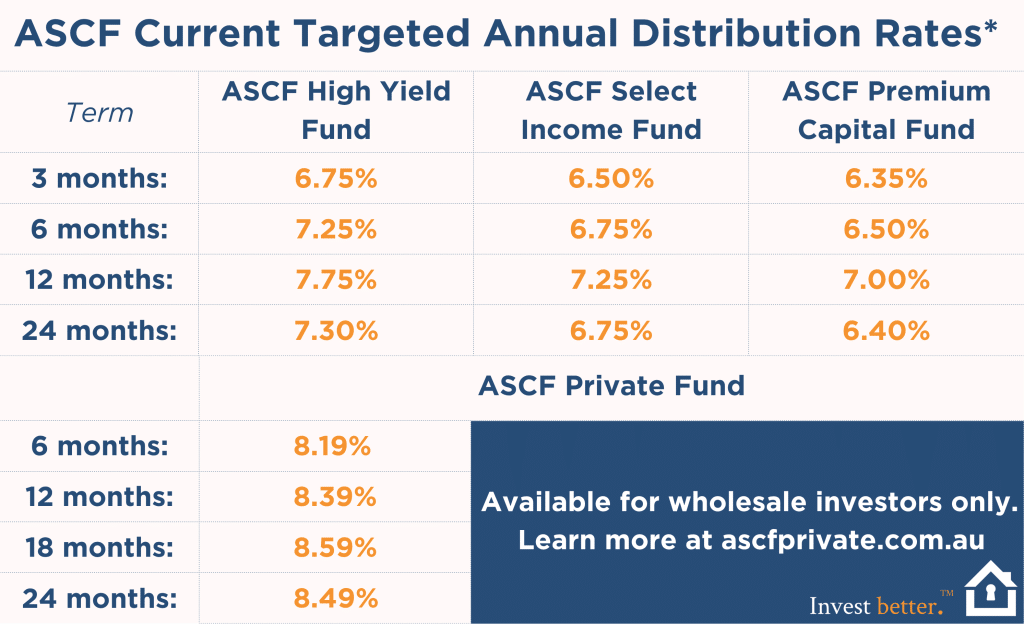
With evolving RBA forecasts and persistent inflation remaining a concern, ASCF’s funds provide an appealing alternative to fluctuating variable-rate assets. Our ASCF High Yield Fund offers a targeted distribution rate of 7.75% per annum for a 12-month fixed term, with interest paid monthly, and is worth considering as part of any diversified investment portfolio.*
Interested in investing in ASCF or increasing your investment in the funds? Book a time to receive a call back at your convenience or click here to receive an investor pack.
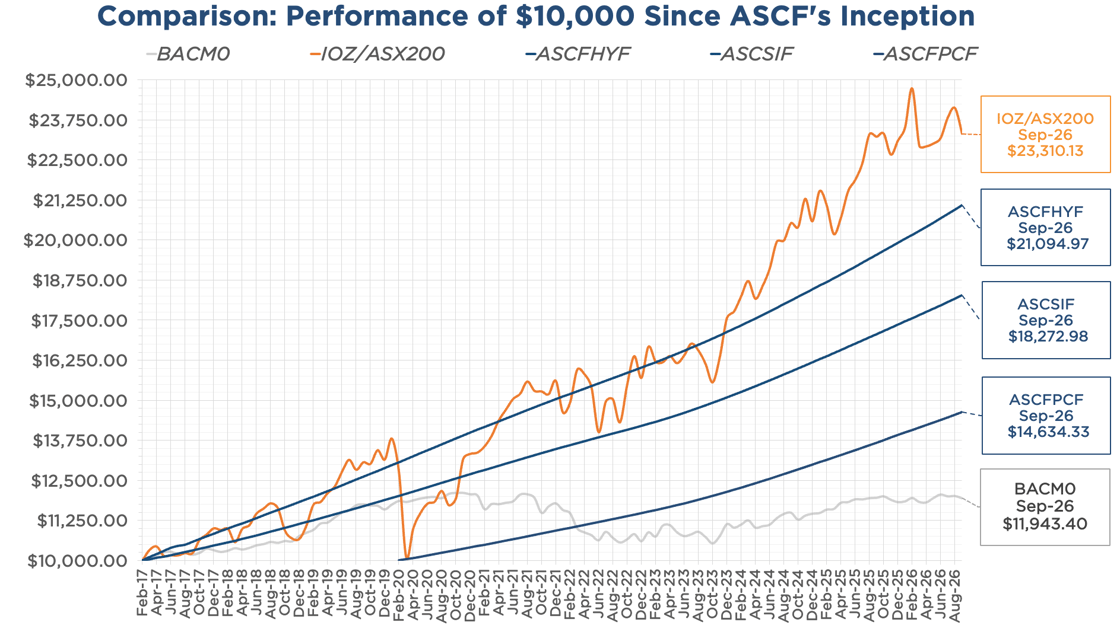
Sources: Australian Fund Monitors, Bloomberg, Investing.com
Note 1: Premium Capital Fund began in February of 2020
Note 2: Past performance is not indicative of future performance.
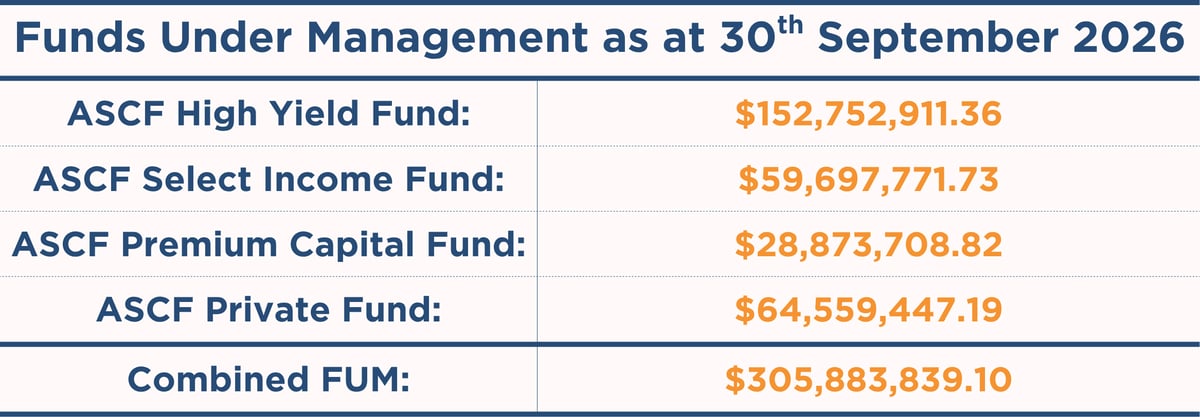
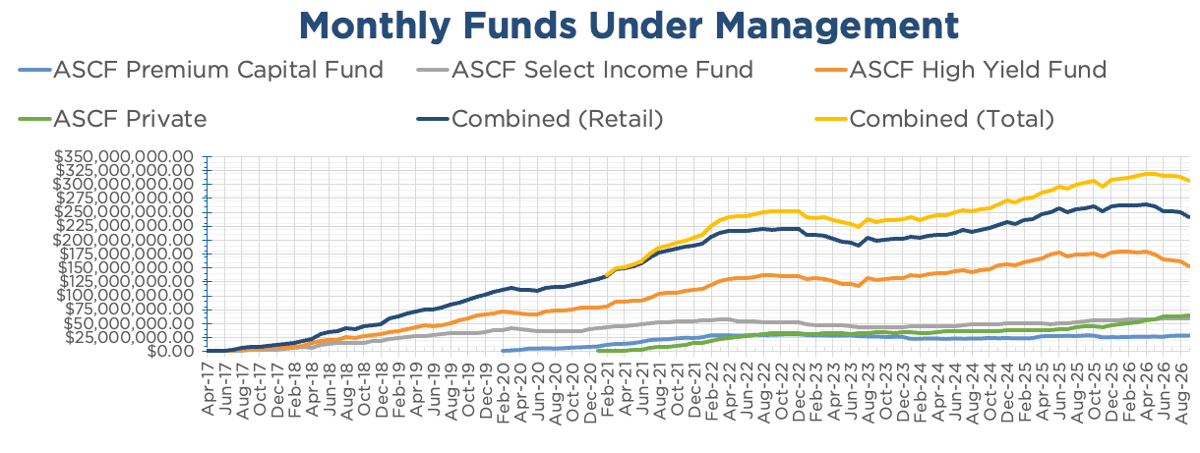
To learn more, see our Investor FAQs or visit our page on How to Invest.
Lending Activity Update
In September, inquiry levels were healthy, with $14,694,613.44 in loans settled.
The unit price across all three of our retail funds remains at $1.00 per unit, and all monthly distributions have been paid in full for September.
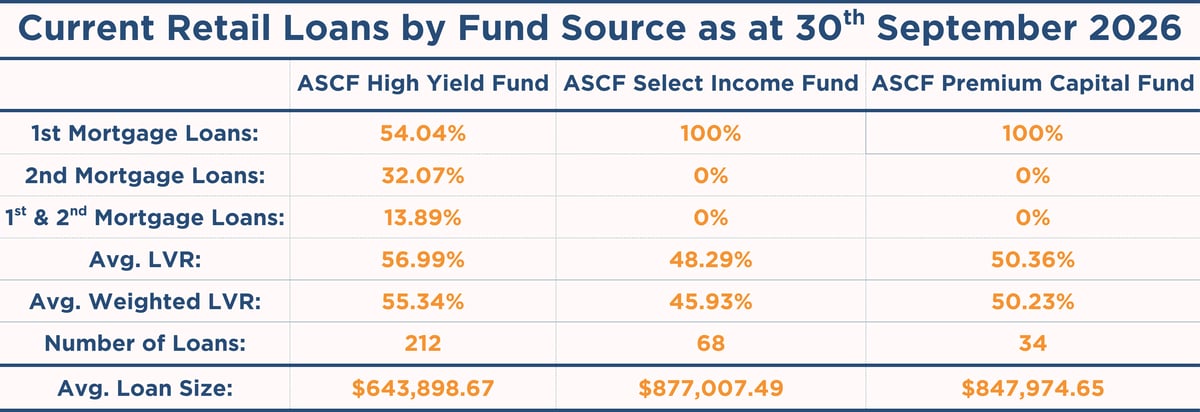
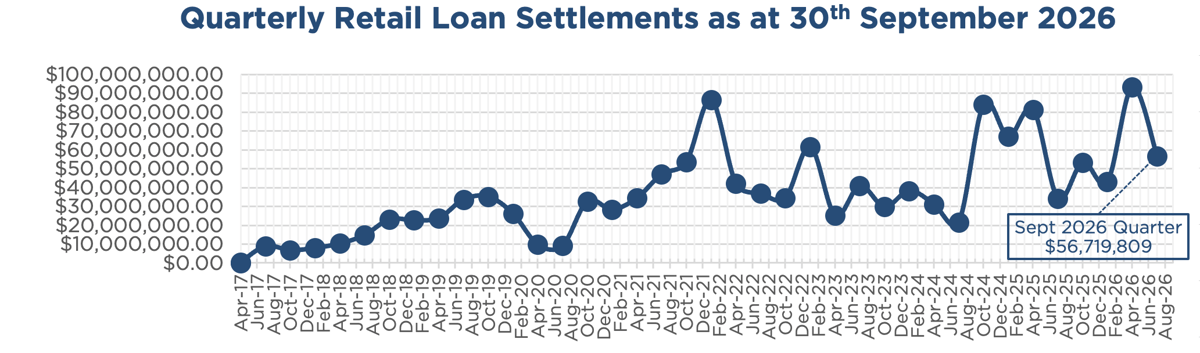
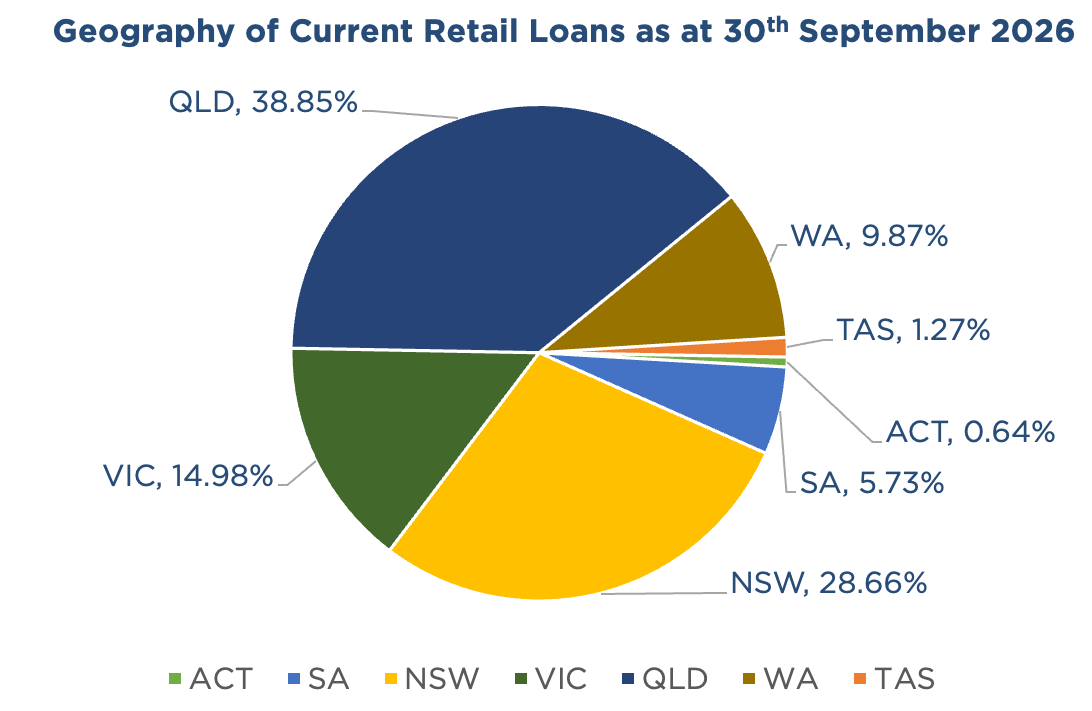
To learn more, see our Borrower FAQs or visit our Loan Summary as at 30th September 2026.
Why Loan Duration Matters For Investors
In property-backed lending, timing can be critical. Interest rates, property values, and broader economic conditions can all vary significantly over time.
While no lending strategy can eliminate these risks, shorter-term lending can help limit the period over which a lender is exposed to fluctuating market conditions.
Limiting Macroeconomic Exposure
A 12-month loan term gives the lender a defined timeframe over which the borrower is expected to repay the loan. This can provide greater clarity around the lending horizon and limit exposure to changes that may occur over a longer period.
By comparison, a longer-term loan may remain exposed to multiple economic and property cycles before repayment.
Greater Visibility
Shorter loan terms can also provide greater visibility around the factors that underpin the original lending decision. A borrower’s financial position, the property’s value, and the proposed exit strategy can be assessed against a relatively defined timeframe, rather than requiring assumptions about future conditions.
Liquidity
ASCF retail funds have an average loan term of 7-8 months, which provides considerable underlying liquidity to our funds when required. This is a distinguishing feature of our loan investments and differentiates ASCF retail funds from other mortgage funds that provide longer term loans.
The Importance of Active Management
Short-term lending does not eliminate risk. Rather, it places greater emphasis on the quality of the initial lending assessment, the proposed exit strategy, and ongoing management throughout the loan term.
At ASCF, our focus on short-term lending forms part of our broader approach to managing the Fund’s exposure. For investors, understanding the duration of the underlying loans can therefore be an important part of understanding how a mortgage fund manages exposure to changing economic conditions.
Want to learn more? Contact us to explore your investment options.
Important information: Since inception, all investors have received their targeted distribution rate monthly, and all redemption requests have been paid on time and in full. However, past performance is not indicative of future performance. Distributions are not guaranteed, nor a forecast. Lower than expected returns may be achieved. Investment in the Funds is not a bank deposit, and investors risk losing some or all of their capital. Read the PDS and TMD, available from our website.
An Interesting Transaction
Problem:
A broker approached ASCF on behalf of a landscaping business owner who was seeking funding to purchase two new excavators and provide additional working capital. The funding would allow the borrower’s business to hire another staff member and reduce its reliance on hired machinery.
Solution:
Recognising the borrower’s extensive industry experience, ASCF was able to provide a $255,000 2nd mortgage loan at 16.95% p.a. over a 12-month term.
With a post-drawdown LVR of 47.59% against Cotality’s desktop valuation, ASCF leveraged the existing equity in the borrower’s property to provide the required capital.
The borrower’s intended exit strategy is refinancing to a longer-term lender prior to the expiry of the 12-month loan term.
The ASCF Advantage:
ASCF can provide flexible funding solutions when traditional lenders may be unable to accommodate a business’s requirements. By taking a practical approach and leveraging available property equity, ASCF was able to provide capital to support the continued growth of an established business.
Property Update
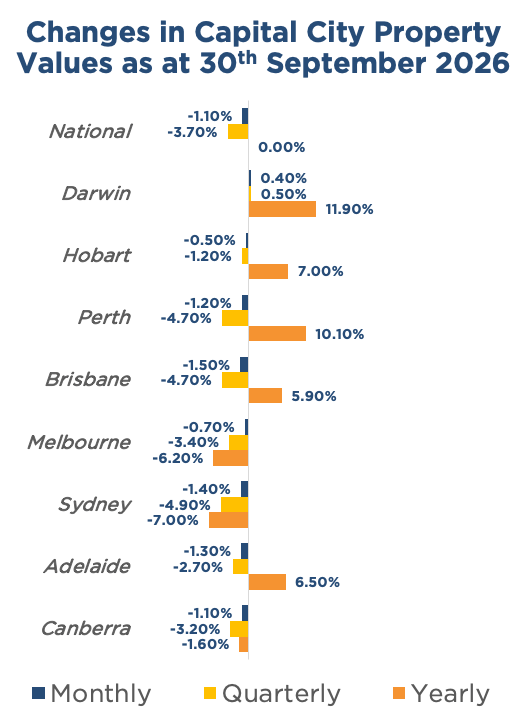
Australia’s ongoing decrease in home values has continued in September, with national dwelling values decreasing by 1.1%, marking the sixth straight monthly fall. Since the peak in March, the cumulative decline in home values has now reached 5.2%.
This time, Brisbane (-1.5%) posted the largest monthly decrease, though Sydney (-1.4%) was not far behind, with Adelaide (-1.3%), Perth (-1.2%), and Canberra (-1-1%) also posting sizeable monthly declines.
After posting declines of greater than 1% for the past three months, there are some signs that the rate of decline is slowing in Melbourne, though it still posted a -0.7% monthly decline, with Hobart (-0.5%) not far behind.
Once again, Darwin (+0.4%) was the only capital city to see a monthly increase in home values. Regional markets continue to be more resilient than the capital cities, with regional values up 5.6% annually compared with a 1.8% annual decline for the combined capitals.
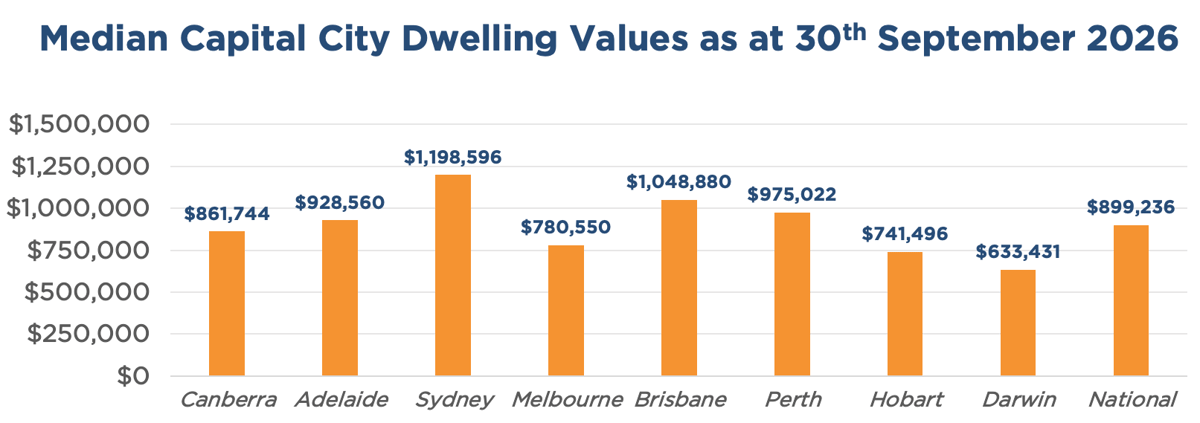
Source: Cotality HVI, 01 October 2026
Are you looking to invest in ASCF or increase your investment in the funds? Book a time to receive a call back at your convenience or click here to receive an investor pack.