
We’re back with another ASCF investor’s update, covering all the key economic and market trends from the past month, including evolving RBA prospects, the continued property market decline, inflation, and more.

You can catch up with past investor’s updates on the ASCF Blog. If you would like to receive these updates monthly via email, you can sign up to receive an Investor Pack here. To learn more, see our page on How to Invest.
Trading Update
With July’s inflation data coming in above previous expectations, the Big Four banks have now re-evaluated their RBA forecasts, with the Board next scheduled to meet on the 29th of September.
Inflation & RBA Prospects
The CPI rose to 3.5% in the 12 months to July 2026, down from 3.8% in the 12 months to June 2026. In seasonally adjusted terms, this represents a 0.6% increase MoM. Trimmed mean inflation stayed at 3.6% in the 12 months to July 2026, up 0.5% MoM in seasonally adjusted terms.
These results were higher than most forecasts and remain above the RBA’s 2-3% target range. As a result, the Big Four banks have all updated their RBA forecasts, having previously predicted an extended hold for the rest of 2026.
NAB have made the sharpest shift to their forecast to become the most hawkish of the Big Four, predicting that the RBA will increase rates by 25bp in September to 4.60%. They also warn that this “risk is biased towards an additional hike in November.”
On the other hand, CommBank, ANZ, and Westpac are all now forecasting a 25bp rise in November to 4.60%. Previously, these banks had warned of a hike in November while stating it wasn’t their base case. ANZ explains that this updated forecast is due to “persistent inflation and the resilience in household spending”, with CommBank echoing that “inflation is proving more persistent than expected.”
Westpac were the last of the Big Four to update their forecast, but now believe that “the likelihood of an additional rate hike has risen enough to make a November hike (+25bp to 4.6%) the base case again”, citing “the growing evidence of a more resilient household sector” and “the spillovers from the data centre boom.” CommBank and Westpac also acknowledge the potential for a hike in September, with Westpac stating “the probability of the September scenario is not zero.”
Our internal view is that the monthly unemployment figures set to be released on the 24th of September will be the key data point the RBA will rely on to determine whether rates will increase this month. If unemployment continues to increase, the RBA may decide to hold and review again after the September quarter inflation data is released on the 28th of October 28th, prior to their next meeting on the 2nd of November.
With consumer confidence data remaining severely depressed by historical standards, there is much for the RBA to ponder. If we had to call it, we believe the RBA will remain on hold, although we still believe one more rate hike is possible prior to the end of the year, with rates likely to start falling by mid next year as inflation begins to come down.
Property Market Overview
In the property market, home values continued to fall in August, posting a -0.9% monthly decline. This marks the fifth consecutive monthly decline, and the largest since December 2022, surpassing last month’s -0.7% fall.
Auction clearance rates have rebounded somewhat after being down 18% over winter compared to winter 2025. For the week ending 13th September, clearance rates were 58.5%, the highest result for 19 weeks. However, this remains below the equivalent clearance rate of 74.8% at the same time last year.
Our view remains that the market is heading for a national peak-to-trough price reduction of approximately 4-5% in residential housing. As such, we expect next month to be the bottom of this decline, with prices likely to stabilise thereafter. Values are currently 3.6% below the recorded peak in March, and while transaction volumes remain subdued, the structural undersupply in housing should continue to support prices over the medium term.
How ASCF Helps
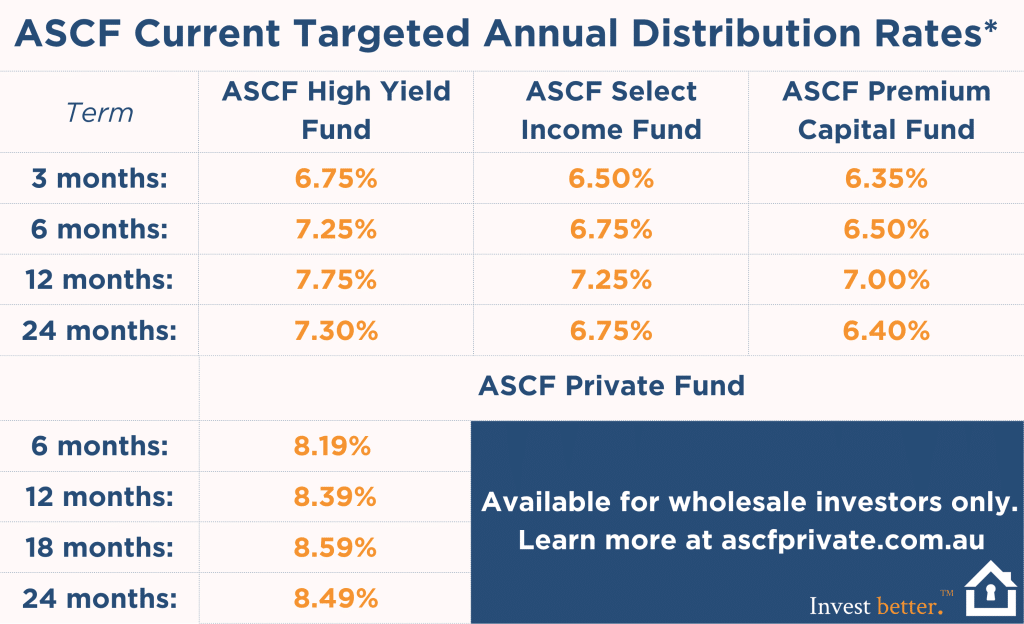
With evolving RBA forecasts and persistent inflation remaining a concern, ASCF’s funds provide an appealing alternative to fluctuating variable-rate assets. Our ASCF High Yield Fund offers a targeted distribution rate of 7.75% per annum for a 12-month fixed term, with interest paid monthly, and is worth considering as part of any diversified investment portfolio.*
Interested in investing in ASCF or increasing your investment in the funds? Book a time to receive a call back at your convenience or click here to receive an investor pack.
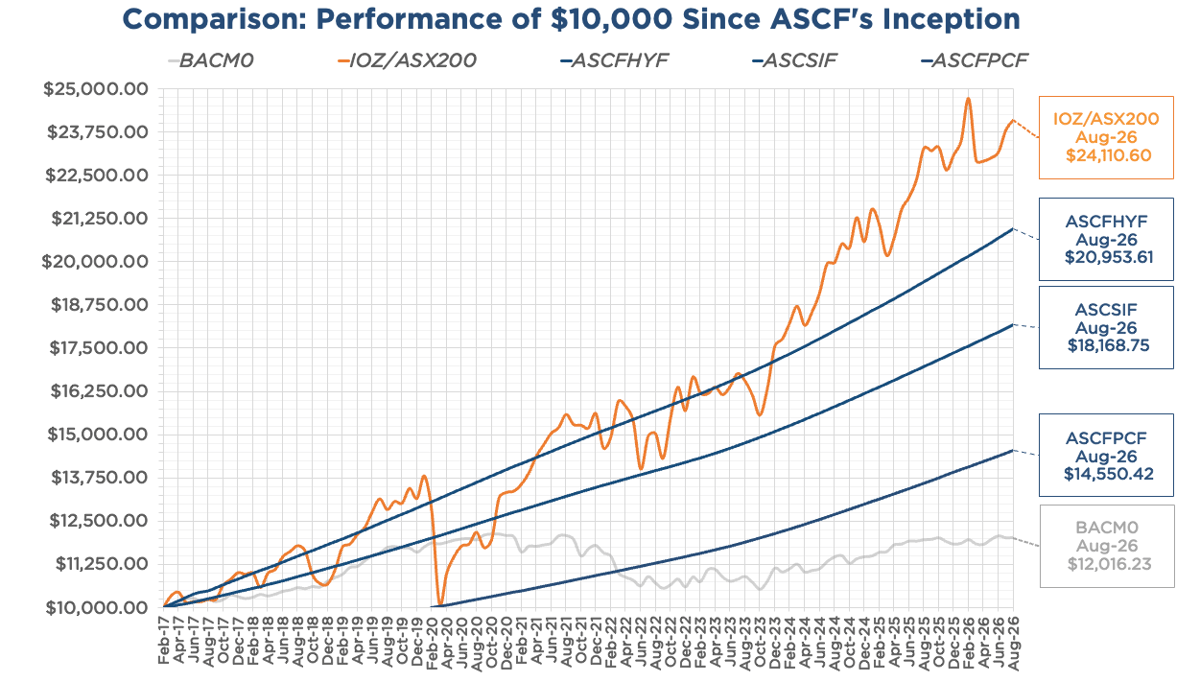
Sources: Australian Fund Monitors, Bloomberg, Investing.com
Note 1: Premium Capital Fund began in February of 2020
Note 2: Past performance is not indicative of future performance.
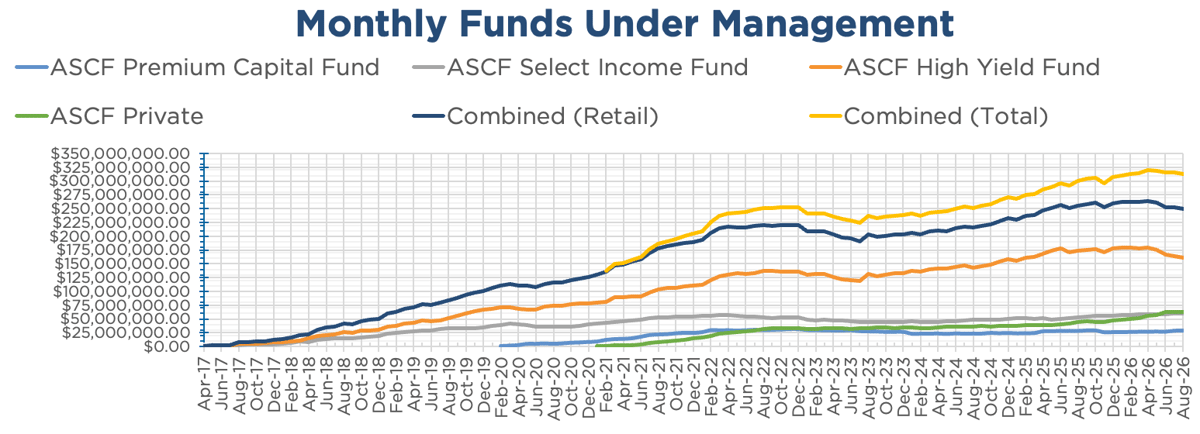
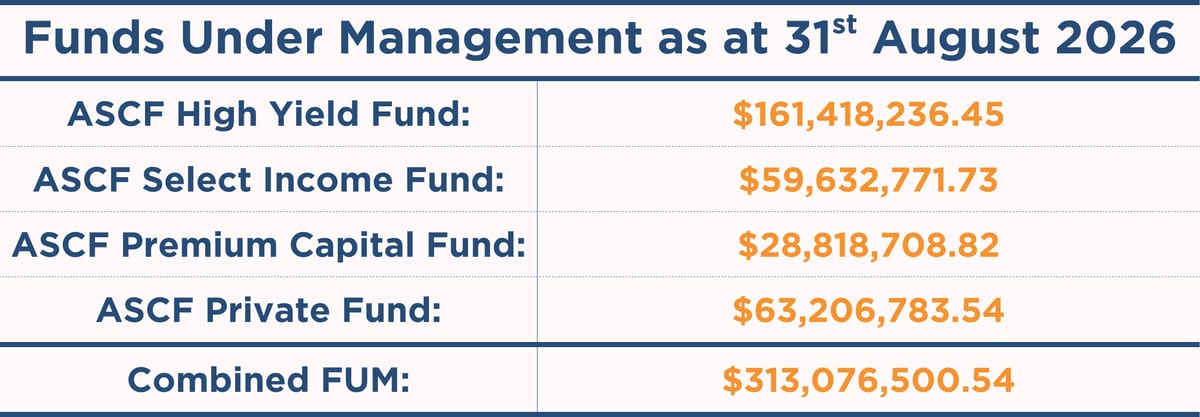
To learn more, see our Investor FAQs.
Lending Activity Update
In August, inquiry levels were strong, with $23,326,656.01 in loans settled.
The unit price across all three of our retail funds remains at $1.00 per unit, and all monthly distributions have been paid in full for August.
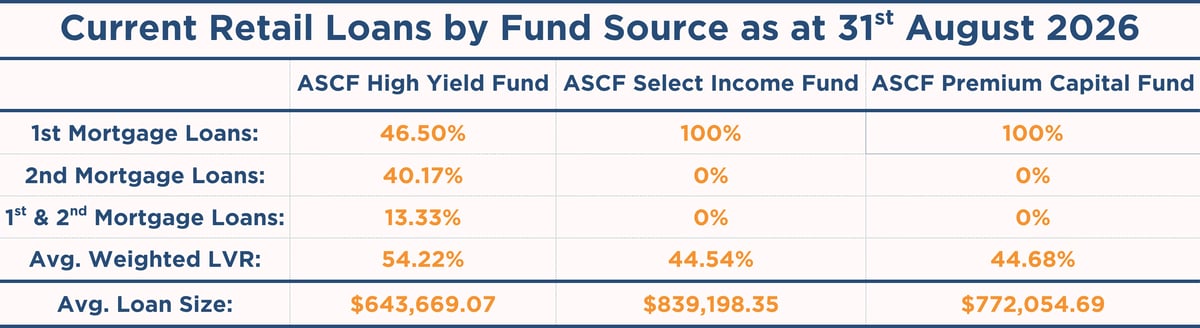
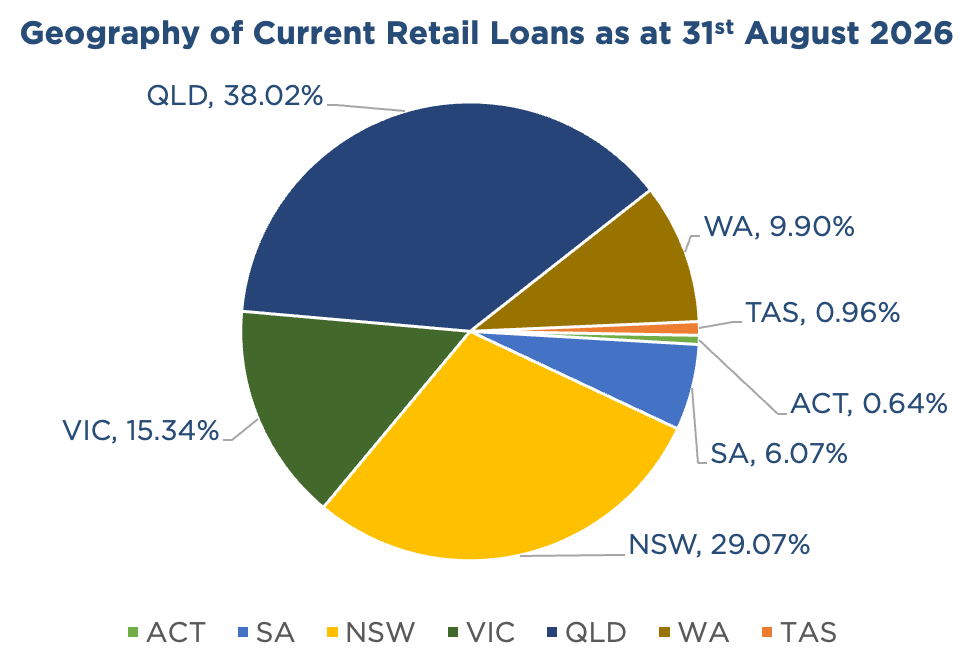
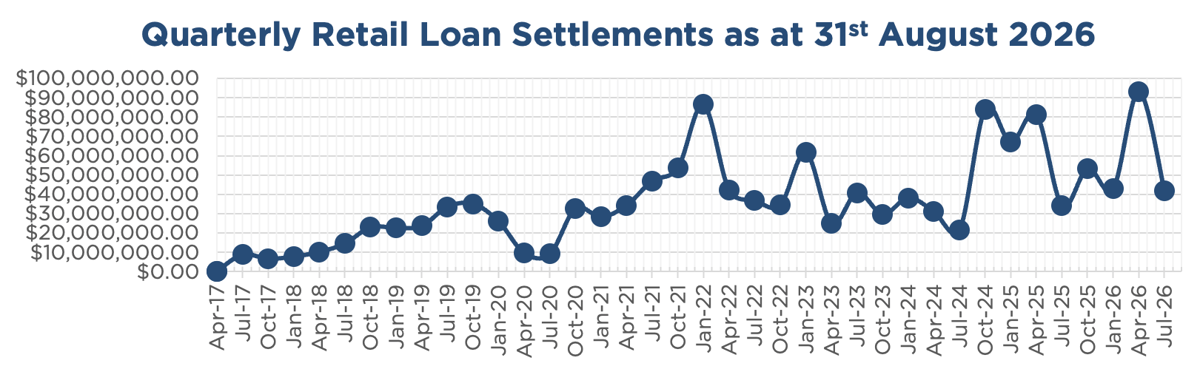
To learn more, see our Borrower FAQs or visit our Loan Summary as at 31st August 2026.
Understanding LVR (And Why It Matters For Investors)
A loan-to-valuation ratio, or LVR, is one of the key measures used to assess a property-backed loan. Given this, understanding LVRs and why they matter is vital for savvy investors.
What is an LVR?
Put simply, an LVR is a ratio of the amount being lent and the value of the property securing the loan. For example, a $600,000 loan secured against a property valued at $1 million would represent an LVR of 60%, while a $700,000 loan against the same property would represent an LVR of 70%, and so on.
Types of LVRs
A key consideration when looking at LVRs is what they are being measured against. Many lenders, including ASCF, measure an LVR against the security property’s ‘as is’ valuation, that is, what the property is currently valued at in its present state.
However, some lenders will also lend against ‘as if complete’ valuations, that is, what the property would be worth under current market conditions when completed. While both are valid methodologies, they carry different risks and considerations for investors.
Why LVRs Matter
This is the crux of why understanding LVRs matters for investors: the type of LVR employed and the maximum LVR a lender accepts can materially change the risk profile of a property-backed investment. As such, performing thorough due diligence to understand a lender’s LVR parameters is crucial.
At ASCF, we only lend against ‘as is’ valuations, with maximum LVRs of 80% for our High Yield and Select Income Funds, and 70% for our Premium Capital Fund.
Want to learn more? Contact us to explore your investment options.
Important information: Since inception, all investors have received their targeted distribution rate monthly, and all redemption requests have been paid on time and in full. However, past performance is not indicative of future performance. Distributions are not guaranteed, nor a forecast. Lower than expected returns may be achieved. Investment in the Funds is not a bank deposit, and investors risk losing some or all of their capital. Read the PDS and TMD, available from our website.
An Interesting Transaction
Problem:
A broker approached ASCF on behalf of a self-employed builder who was seeking funding to unlock equity from an investment property in Depot Hill, Queensland. The borrower required short-term funding to complete renovations on the property to maximise its value before listing it for sale.
Solution:
Given the unencumbered security property and the borrower’s strong credit history, ASCF was able to provide a $188,000 1st mortgage loan at 10.75% p.a. for a 12-month term, representing a 49.47% LVR against the $380,000 property valuation.
The funds will be used to complete renovations on the security property before listing it for sale. The borrower then intends to refinance with another lender within the 12-month term, which serves as their exit strategy.
The ASCF Advantage:
ASCF understands that borrowers sometimes require short-term funding to unlock equity and improve the value of their property before refinancing. By taking a practical approach to the borrower’s circumstances, ASCF was able to provide the funding required to complete the renovations.
Property Update
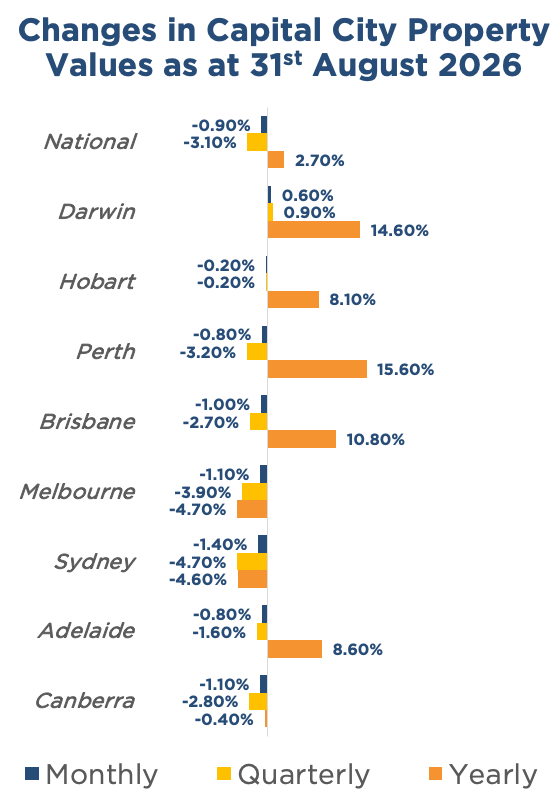
The Australian property value decline continued in August with a -0.9% monthly fall. This is the fifth consecutive monthly decline, with values now falling 3.6% below the market peak recorded in March.
Sydney (-1.4%) and Melbourne (-1.1%) are still setting the pace in this regard, posting their seventh consecutive monthly declines.
However, the mid-sized capitals have all joined the slide now too, with Brisbane (-1.0%), Adelaide (-0.8%), Perth (-0.8%), Canberra (-1.1%), and Hobart (-0.2%) all posting monthly declines. Darwin (+0.6%) was the lone outlier that posted a monthly increase in values in August.
Largely, this is a reflection of declining buyer demand, with Cotality’s quarterly home sales estimate tracking 15.5% lower than at the same time last year. Similarly, capital city listings were 24% higher than a year ago in the four weeks to August 30.
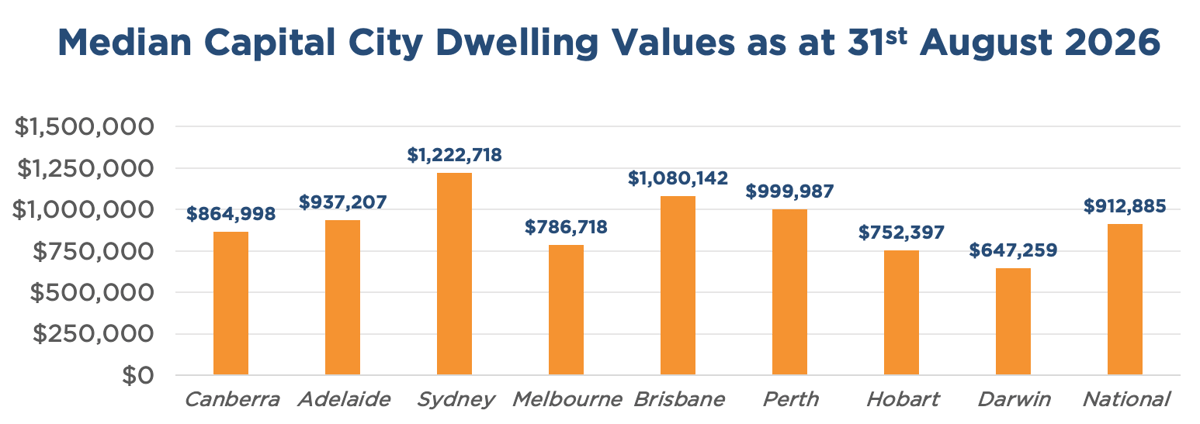
Source: Cotality HVI, 01 September 2026
Are you looking to invest in ASCF or increase your investment in the funds? Book a time to receive a call back at your convenience or click here to receive an investor pack.