
It’s time for another ASCF investor’s update, covering all the leading market trends from the past month, including the latest RBA moves, property market updates, inflation insights, and more.
You can catch up with past investor’s updates on the ASCF Blog. If you would like to receive these updates monthly via email, sign up to receive an Investor Pack here, or click here to invest now.
Trading Update
The RBA elected to increase the official cash rate to 4.85% at their November meeting, bringing rates to their highest point in Australia since November 2008.
RBA Prospects & Unemployment
Following the RBA’s split decision (6-3) to increase the official cash rate for the fifth time in 2026, eyes will now turn to the Board’s final meeting of the year on December 8th.
In their official statement, the Board attributed this decision to inflation, which remains “elevated” and “broadly based.” As a result, they have revised their long-term forecast, with inflation now “not expected to reach the top of the 2–3 per cent target range until late 2027, around three quarters later than previously forecast.” Other contributing factors included “higher fuel and other commodity prices affected by the conflict in the Middle East” and “AI-related investment.”
The unemployment rate also increased in October, rising by 0.1pts in seasonally adjusted terms to 4.9%. This marks the highest unemployment rate in Australia since October 2021, when it reached 5.2%.
In response to these rising unemployment figures, the Big 4 banks all expect the RBA to remain on hold in December. ANZ believes that “the cash rate has likely peaked”, adding that “a weaker labour market” should “help to lower inflation.” ANZ have also taken the most dovish stance of the Big Four, predicting that the RBA will begin cutting rates in June 2027, sooner than their initial prediction of November 2027. In contrast, CommBank, Westpac, and NAB have cuts pencilled in for August 2027.
NAB also expect the Board to hold for the foreseeable future, adding they “expect the RBA cash rate to remain at 4.85% until August 2027, when rate cuts are forecast to begin.”
CommBank’s analysts now expect “the RBA to remain on hold unless inflation surprised materially to the upside.” Westpac have also taken a strong stance against further rises, noting, “we believe further interest rate hikes are not only unlikely, but undesirable.” Even so, they concede “a rate hike in February 2027 can’t be completely ruled out.”
Inflation & Property Market Overview
September’s inflation data played a key role in the Board’s decision to increase rates again, with the CPI rising to 4.3% in the 12 months to September 2026 (+0.6% MoM seasonally adjusted), up from 4.0% in the 12 months to August 2026. Trimmed mean inflation rose to 3.6% in the 12 months to September 2026 (+0.3% MoM seasonally adjusted), up from a revised 3.5% in the 12 months to August 2026.
In the property market, home values fell for the seventh consecutive month with a -1.2% decrease in October, bringing the cumulative decline since the March peak to 6.7%.
Our View
There are now clear signs that the impacts of this year’s five RBA rate rises have affected unemployment and consumer confidence, and are likely to have an impact on the RBA’s fight against inflation in the coming months. We agree with ANZ’s commentary that rates are now decisively on hold and that the next move by the RBA will be down and not up. We expect the RBA to reduce rates by between 0.5% and 0.75% next year starting as early as May, with two further reductions late next year as inflation tracks downward towards the RBA’s target band of 2-3%.
Whilst the release of Wednesday’s October inflation data showed an increase in headline inflation to 4.9%, this was predominantly driven by fuel, which has since come down.
While residential property prices are yet to bottom out, we expect this to occur over the next 2-3 months, with Melbourne to lead the recovery. This will be driven largely by the expected outcome of this weekend’s Victorian Election and an uptick in consumer confidence from the RBA’s likely decision to leave rates on hold in its upcoming December meeting.
Increased Targeted Distribution Rates From 01 December
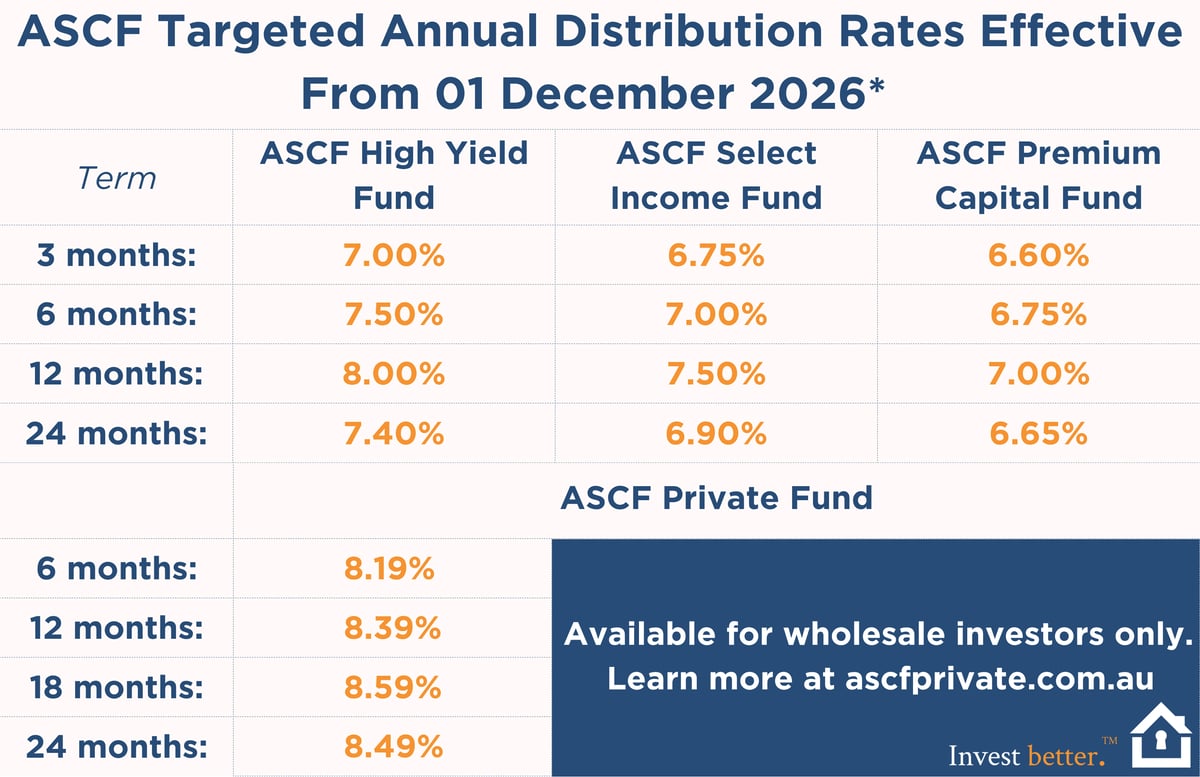
In view of the RBA rate rises, we are pleased to advise that we will be increasing our targeted distribution rates across our ASCF High Yield, Select Income, and Premium Capital Funds effective from 1st December 2026. The ASCF Private Fund targeted distribution rates will remain unchanged.
Please note that these rate increases will apply to all new investments made on or after 01 December 2026. Existing investments will receive the benefit of the new rates as the investments roll over on their respective maturity dates.
The new targeted distribution rates will be as follows:
How ASCF Helps
With evolving RBA forecasts and persistent inflation remaining a concern, ASCF’s funds provide an appealing alternative to fluctuating variable-rate assets. Our ASCF High Yield Fund offers a targeted distribution rate of 8.00% per annum for a 12-month fixed term for new investments from 01 December 2026, with interest paid monthly, and is worth considering as part of any diversified investment portfolio.
Interested in investing in ASCF or increasing your investment in the funds?
Book a time to receive a call back at your convenience.
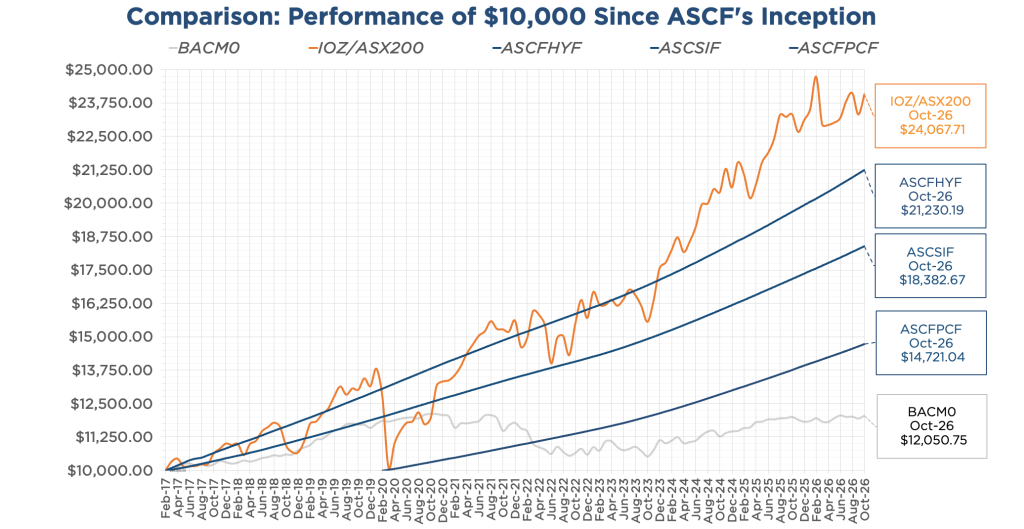
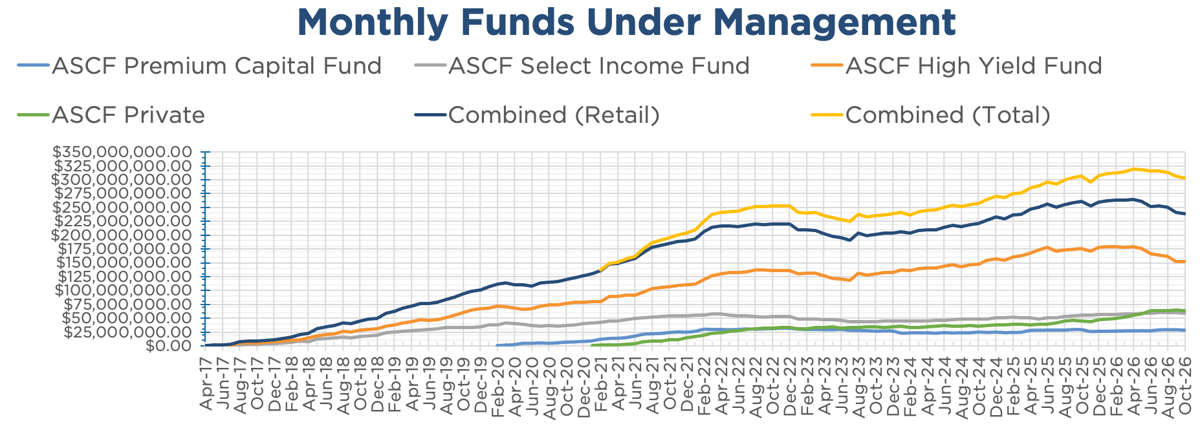
Sources: Australian Fund Monitors, Bloomberg, Investing.com
Note 1: Premium Capital Fund began in February of 2020
Note 2: Past performance is not indicative of future performance.
To learn more, see our Investor FAQs or visit our page on How to Invest.
Lending Activity Update
In October, inquiry levels were strong, with $11,562,267.85 in loans settled.
The unit price across all three of our retail funds remains at $1.00 per unit, and all monthly distributions have been paid in full for October.
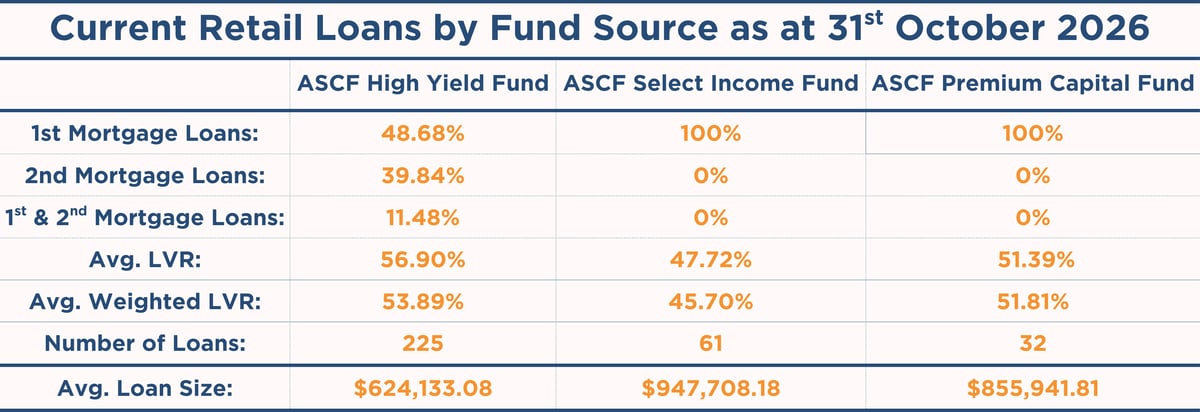
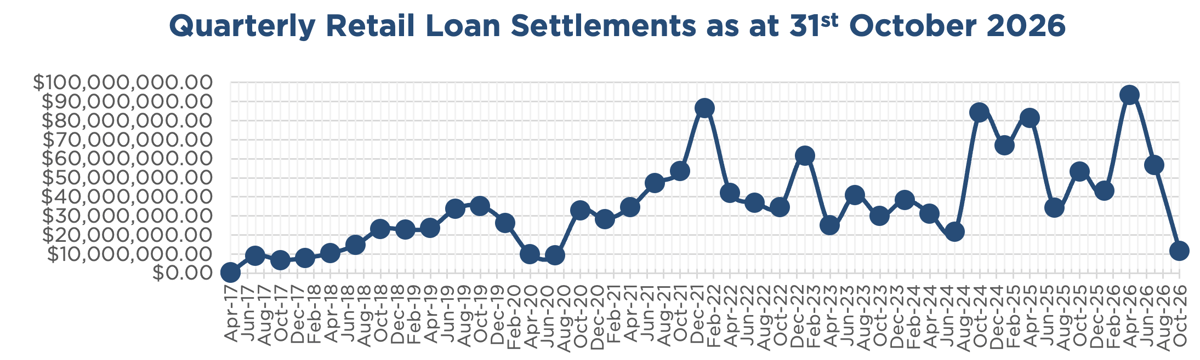
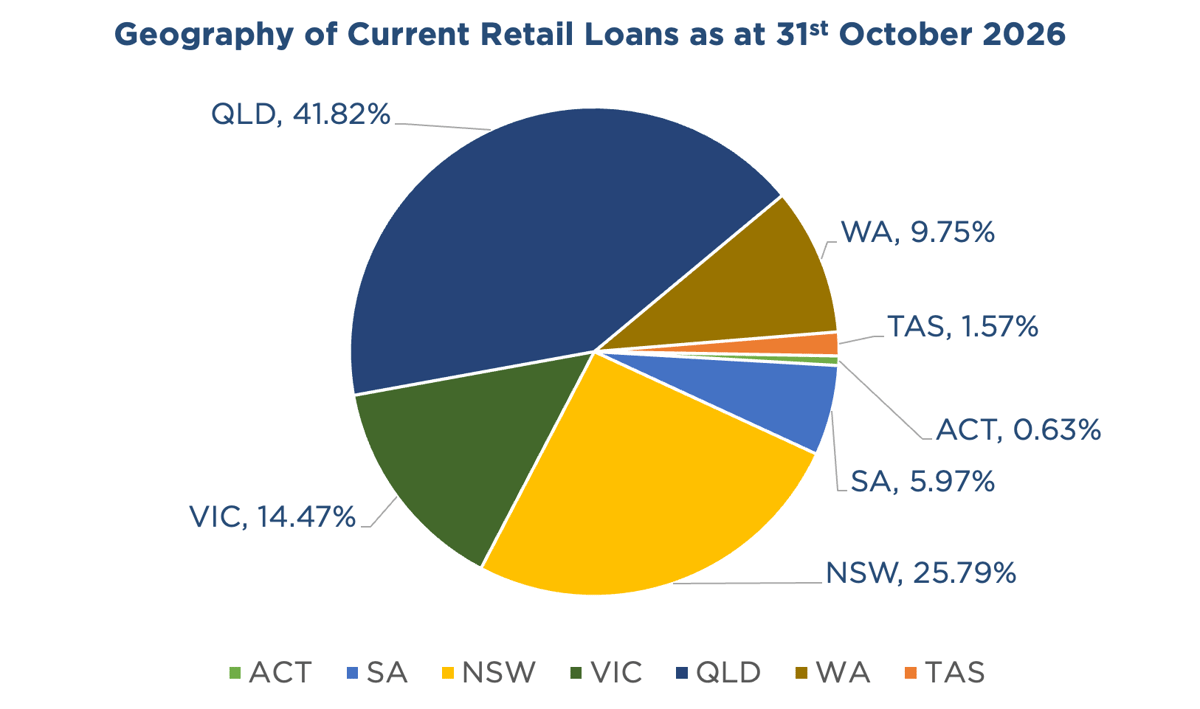
To learn more, see our Borrower FAQs or visit our Loan Summary as at 31st October 2026.
The Importance of a Clear Exit Strategy
Why the Exit Strategy Matters
When assessing a proposed loan scenario, understanding how a borrower intends to repay it is just as important to us as evaluating the underlying property security. The repayment plan, known as an ‘exit strategy’, is a critical step of our initial credit assessment. This also includes testing the security’s volatility and the loan’s suitability for the applicant.
Identifying the Exit Strategy
As a short-term lender, ASCF considers a borrower’s proposed exit strategy from the outset to help us understand the circumstances and risk profile of each loan. A borrower may intend to repay through refinancing, the sale of an existing property, or another identified source of funds.
Assessing Its Viability
Having an exit strategy isn’t enough on its own. To receive a loan from ASCF, it must be practical and verifiable. Our lending team assesses whether the strategy is realistic, whether it is supported by evidence, whether the timeframe is achievable, and whether any other factors could potentially prevent repayment.
Ongoing Monitoring
Once a loan is approved, the exit strategy isn’t just set aside until repayment. At ASCF, we monitor our loans diligently to identify early signs of potential issues. Where concerns arise, we seek to work collaboratively with borrowers to achieve their intended exit strategy or, where necessary, explore alternative strategies to facilitate repayment. This proactive approach to loan management helps us identify and address issues early, supporting the management of lending risks and protecting the interests of our investors.
Want to learn more? Contact us to explore your investment options.
Important information: Since inception, all investors have received their targeted distribution rate monthly, and all redemption requests have been paid on time and in full. However, past performance is not indicative of future performance. Distributions are not guaranteed, nor a forecast. Lower than expected returns may be achieved. Investment in the Funds is not a bank deposit, and investors risk losing some or all of their capital. Read the PDS and TMD, available from our website.
An Interesting Transaction
Problem:
A broker approached ASCF on behalf of a married couple seeking bridging finance to purchase a block of land in Alligator Creek, Queensland, where they planned to build their new home. However, they wanted to commence construction on their new property before selling their existing home.
Solution:
ASCF was able to provide a $525,000 2nd mortgage loan at 12.95% p.a. over a 6-month term, representing a 62.5% LVR. The facility was secured against the borrowers’ existing home and the land being purchased.
The borrowers planned to live with family in the interim and list their existing home for sale once construction commenced, with the sale proceeds serving as their exit strategy.
The ASCF Advantage:
By providing a short-term bridging loan secured against both properties, ASCF enabled the borrowers to secure the land for their next home and begin construction before selling their existing property, giving them greater flexibility to manage the transition.
Property Update
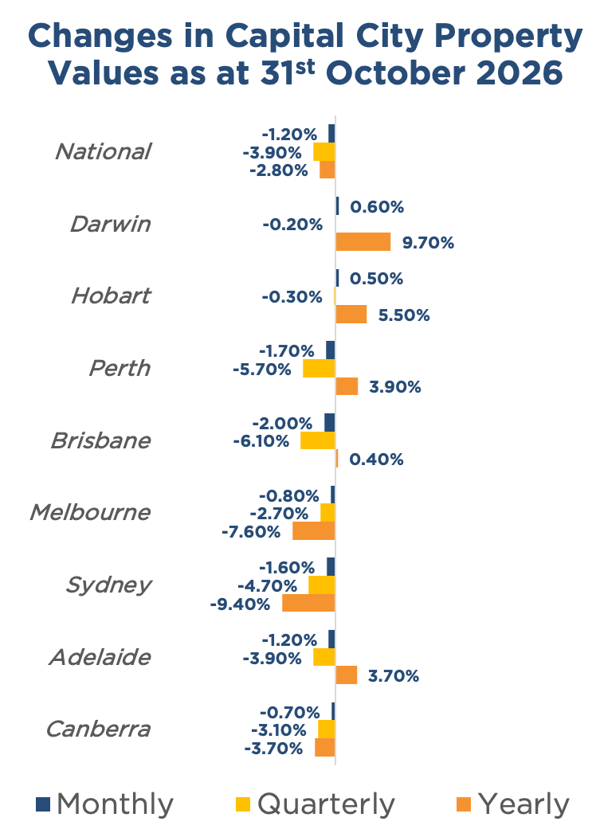
The downturn in Australian property values continued in October, posting a 1.2% monthly decline. This marks the seventh consecutive monthly decrease in Australian dwelling values, bringing the drop from the March peak to 6.7% nationally and 8.1% for the combined capital cities. As such, Cotality now notes that the “speed of the decline in home values is tracking at the fastest pace seen over the past forty years.”
Brisbane (-2%) and Perth (-1.7%) are now experiencing the most rapid pace of decline, although Sydney (-1.6%) is not far behind, with Adelaide (-1.2%), Melbourne (-0.8%), and Canberra (-0.7%) also posting monthly falls in home values.
On the other hand, prices in Darwin (+0.6%) continue to be more resilient, with Hobart (+0.5%) also posting a slight monthly increase.
This ongoing decrease in values has led to a decline in home sales volumes, with Cotality finding that the number of home sales over the past three months is 23% lower than a year ago and 18% below the five-year average.
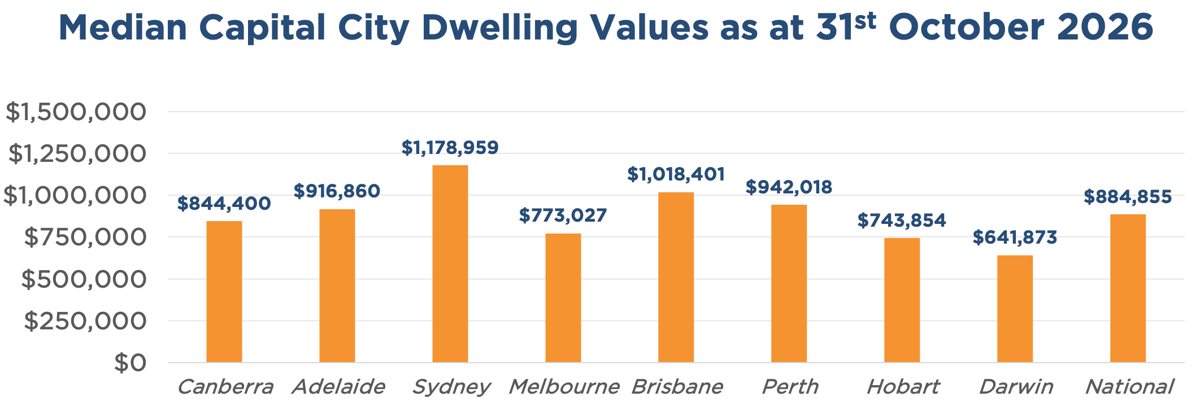
Source: Cotality HVI, 02 November 2026
Are you looking to invest in ASCF or increase your investment in the funds? Book a time to receive a call back at your convenience or click here to receive an investor pack.